


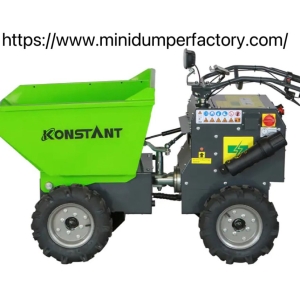
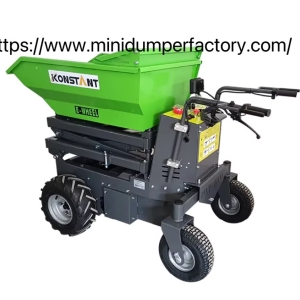
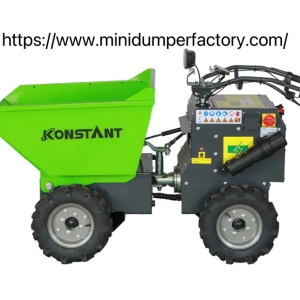
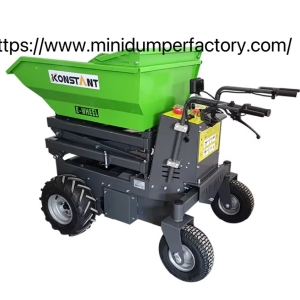

Mini Dumper Factory purchasing decisions require careful planning before a buyer confirms an order. Construction contractors, landscaping businesses, agricultural operators, rental companies, and equipment distributors may have different requirements for compact transport machinery. Reviewing the intended application, load capacity, working environment, unloading arrangements, customization options, and delivery terms can help buyers prepare a clear inquiry and discuss suitable configurations with a manufacturer.
Describe Your Intended Application
Begin by identifying the materials you need to transport and the conditions in which the machine will operate. Construction projects may involve sand, gravel, bricks, or demolition debris. Landscaping businesses may move soil, mulch, plants, and garden waste, while agricultural operations may require equipment for feed, harvested materials, or farm supplies.
Estimate your daily workload, travel distance, ground surface, and available working space. If the machine must pass through narrow gates or work between buildings, record the relevant measurements. These details help the supplier understand your operating environment and discuss suitable product options.
Review Rated Capacity and Hopper Design
Carrying capacity and hopper volume should be evaluated separately. Rated payload refers to the specified carrying weight, while hopper volume indicates the available space for materials. The actual weight of a load depends on its composition and condition.
For example, wet soil and gravel may weigh considerably more than lightweight garden waste occupying a similar volume. Estimate the materials you transport regularly and compare your requirements with the stated machine specifications.
Also check hopper dimensions, loading height, shape, and cleaning access. These features may affect compatibility with your existing equipment and the convenience of daily material handling.
Consider Ground Conditions and Machine Dimensions
The worksite should guide your choice of drive configuration and overall machine size. Tracked designs may suit certain soft or uneven surfaces, while wheeled versions may fit operations involving firm ground and established access routes.
Assess slopes, turning space, transport distances, and changes in surface conditions. Measure entrances, pathways, storage areas, and unloading zones to determine whether the selected machine can move through the site comfortably.
Ask the supplier for the relevant dimensions and operating specifications. Comparing these details with your site measurements can help you avoid choosing a configuration that does not fit your working environment.
Select an Appropriate Unloading Arrangement
The unloading system should match the destination and handling process. Depending on the available models, options may include conventional tipping mechanisms, high-tipping configurations, or other arrangements intended for specific applications.
Consider whether materials will be discharged into a container, beside an excavation, or within a restricted area. Review the discharge height, tipping range, control layout, and clearance needed during operation.
If the equipment will work alongside loaders or other machinery, consider how the complete handling process will operate. Explaining these requirements before ordering helps clarify which configurations should be evaluated.
Confirm Customization Requirements Early
Importers and distributors may require customized equipment for their sales channels or target markets. Depending on the manufacturer's capabilities, requests may involve machine color, logo placement, labels, accessories, manuals, or packaging.
Prepare the necessary artwork and written instructions before production discussions begin. Confirm which options are available and whether they affect cost, minimum order quantities, or manufacturing schedules.
For customized orders, ask how the final design will be reviewed and approved. Keeping the agreed requirements in writing provides a clear reference for the purchasing team and production team.
Ask About Inspection and Documentation
Before confirming the order, clarify which product inspections are included. Depending on the agreed specifications, these may cover dimensions, operating functions, appearance, accessories, labels, and packaging.
Buyers who cannot visit the production site may request photographs, operating videos, manuals, or inspection records. Discuss which materials can be provided and when they will be available before shipment.
Documentation requirements can vary by destination and intended use. Confirm the technical information and shipping paperwork needed for your order, and check any applicable import requirements with the appropriate professionals.
Review Maintenance and Spare Parts Arrangements
Maintenance planning should be part of the purchasing process. Ask whether the supplier provides parts lists, maintenance instructions, and guidance for identifying replacement components.
Businesses operating multiple machines may benefit from identifying commonly replaced parts before equipment enters service. Clarify how additional components can be ordered and how technical questions will be handled after delivery.
Review warranty terms in writing, including the coverage period, applicable conditions, claim procedure, and responsibilities for replacement parts or service costs. Understanding these arrangements can help you plan ongoing equipment ownership.
Clarify Commercial and Shipping Terms
Before approving a quotation, check the selected configuration, order quantity, unit price, optional accessories, customization charges, payment schedule, production estimate, packaging method, and shipping responsibilities.
For international orders, confirm the destination, transport arrangements, and required documents. Ask when the production schedule begins and whether it depends on payment, specification approval, or customized artwork confirmation.minidumperfactory provides product information for businesses evaluating compact transport equipment for construction, landscaping, agriculture, and distribution applications. Visit https://www.minidumperfactory.com/product/ to review available models and prepare your purchasing inquiry. Share your intended application, capacity requirements, preferred configuration, order quantity, and delivery expectations with the manufacturer to clarify product options and coordinate the next steps.