

Isobutanol Market to Reach USD 1.47 Billion by 2032, Driven by Chemical Intermediates and Sustainable Production
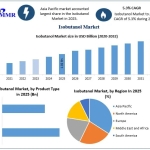
The Isobutanol Market is entering a sustained growth phase as demand increases across chemical intermediates, paints and coatings, oil and gas, automotive, pharmaceuticals, and specialty chemical applications. According to Maximize Market Research, the global Isobutanol Market was valued at USD 1.02 billion in 2025 and is projected to reach nearly USD 1.47 billion by 2032, expanding at a CAGR of 5.3% from 2026 to 2032.
Market Estimation, Growth Drivers and Opportunities
Isobutanol is a versatile, low-boiling alcohol used as a solvent, chemical intermediate, and building block for numerous industrial products. Its favorable solvency, moderate volatility, resin compatibility, and ability to improve coating flow and drying performance are supporting consumption across manufacturing industries.
The market is benefiting from rising demand for paints and coatings, construction materials, automotive products, pharmaceuticals, textiles, and downstream chemicals. Growing consumption of isobutyl acetate, which is manufactured using isobutanol and is widely utilized in coatings, lacquers, and consumer products, is another important growth catalyst.
A major emerging opportunity is the commercialization of bio-based isobutanol. Fermentation-based technologies can provide renewable alternatives to conventional petrochemical production while opening opportunities in sustainable fuels, specialty chemicals, and lower-carbon material applications. Growing industrialization in developing economies, particularly across Asia Pacific, is expected to create additional demand.
Request Your Sample Report Now : https://www.maximizemarketresearch.com/request-sample/56743/
U.S. Market Trends and Investment
The United States remains an important market because of its established chemical manufacturing infrastructure, demand for coatings and solvents, and growing interest in renewable chemicals. A significant 2025 development was Gevo's decision to sell its 18-million-gallon-per-year ethanol facility in Luverne, Minnesota, while retaining key isobutanol production assets. The retained assets provide potential capacity of approximately 1 million gallons per year of low-carbon isobutanol, which can serve chemical markets and be converted into fuels. In 2025, the company also continued advancing renewable-carbon technologies, highlighting the growing U.S. focus on bio-based chemical pathways.
Market Segmentation: Largest Market Share
By application, the Chemical Intermediates segment holds the largest market share. Demand from automotive and construction-related industries, together with the expanding use of isobutanol-derived chemicals, supports its leading position.
By product type, Synthetic Isobutanol is the market leader, accounting for approximately 50% of the market. Its established manufacturing infrastructure, reliable availability, and cost advantages continue to support its dominance, although bio-based production is gaining strategic importance.
Competitive Analysis
The competitive landscape includes large chemical producers and specialized renewable-chemical companies.
The Dow Chemical Company maintains a strong position through integrated chemical production and LP Oxo technology. Its technology converts propylene and synthesis gas into butyraldehydes that can subsequently produce isobutanol for coatings, solvents, and specialty applications.
Mitsubishi Chemical Corporation continues to strengthen process innovation. A 2025 patent publication covering catalyst technology for highly selective isobutylene production from isobutanol demonstrates continued development of downstream conversion technologies that can improve efficiency and product selectivity.
BASF SE remains an important global producer with an extensive chemical manufacturing network. Its 2025 investment strategy emphasized production efficiency, technological development, and expansion across North America, Europe, and Asia Pacific, supporting the broader oxo-alcohol value chain.
Eastman Chemical Company has an established oxo technology portfolio that includes isobutanol for polyester and acrylic resins, lubricant and fuel additives, coatings, and solvents. Its continued optimization of oxo-alcohol economics and pricing demonstrates the importance of supply reliability and raw-material costs in the competitive landscape.
Gevo, Inc. is differentiating itself through bio-based production. In November 2025, Gevo completed the sale of its Luverne ethanol facility while retaining most isobutanol-related assets and patented fermentation capabilities. The move allows the company to preserve a platform for low-carbon isobutanol production and future renewable-fuel applications.
Regional Analysis
China is strategically important to the global market because Asia Pacific dominates overall demand and is expected to record the fastest growth. Expanding automobile manufacturing, construction, oil and gas activity, pharmaceuticals, and chemical production are increasing regional consumption. China also benefits from large integrated petrochemical complexes and downstream manufacturing capabilities.
United States growth is supported by established chemical production, coatings demand, biofuel infrastructure, and investment in renewable chemical technologies. Germany and France benefit from advanced chemical manufacturing and stringent environmental requirements encouraging efficient and lower-impact formulations. UK demand is linked to specialty chemicals, coatings, and industrial manufacturing, while Japan benefits from its sophisticated chemical industry and demand for high-purity intermediates and specialty materials.
Key Players
Key companies operating in the Isobutanol Market include The Dow Chemical Company, Mitsubishi Chemical Corporation, BASF SE, Eastman Chemical Company, Gevo, Inc., Grupa Azoty S.A., Saudi Butanol Company, Andhra Petrochemical Limited, OQ Chemicals, Toray Industries, Sasol, Butamax Advanced Biofuels, INEOS, Formosa Plastics Corporation, and Perstorp Holding AB.
Why This Market Matters Now
The Isobutanol Market matters now because it sits at the intersection of traditional chemical manufacturing and the transition toward sustainable production. Conventional synthetic isobutanol continues to satisfy large industrial requirements, while fermentation-based technologies are creating new opportunities for renewable fuels and low-carbon chemicals. Rising demand for coatings, chemical intermediates, automotive products, and specialty formulations, combined with technological innovation, is expected to sustain market expansion through 2032.
Explore More Related Reports
Global Finished Lubricants Market https://www.maximizemarketresearch.com/market-report/global-finished-lubricants-market/80899/
Chlorinated Polyvinyl Chloride Market https://www.maximizemarketresearch.com/market-report/chlorinated-polyvinyl-chloride-market/188499/
About Maximize Market Research
Maximize Market Research Pvt. Ltd. (MMR) is a global market research and consulting company providing reliable, data-focused, and practical business insights. The firm serves industries including healthcare, pharmaceuticals, technology, automotive, electronics, chemicals, personal care, and consumer goods. Through market forecasts, competitive analysis, strategic consulting, and industry impact assessments, MMR helps organizations understand changing market conditions, identify growth opportunities, and make informed business decisions for long-term success.
Contact Us
2nd Floor, Navale IT Park Phase 3
Pune Banglore Highway, Narhe
Pune, Maharashtra 411041, India
Phone: +91 9607365656
Email: sales@maximizemarketresearch.com