
In a competitive retail market, packaging plays an important role in how customers perceive a product. Before consumers experience what is inside the box, they often judge its quality through its appearance, structure, and overall presentation. For businesses selling luxury gifts, cosmetics, jewellery, electronics, and premium accessories, thoughtful packaging can help create a more memorable customer experience.
Rigid packaging has become a popular choice for brands that want to combine durability with an elegant appearance. Unlike standard folding cartons, rigid boxes use a sturdy board construction that maintains its shape and provides a premium presentation. With the right design, they can protect products while reinforcing a company's visual identity.
What Makes Rigid Packaging Different?
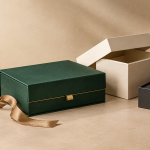
Rigid boxes are manufactured using thick, firm board and are commonly covered with printed paper or decorative materials. Their solid construction gives them a distinctive appearance that works particularly well for high-value products and special occasions.
These boxes are available in several configurations, including lift-off lids, magnetic closures, drawer-style designs, and collapsible structures. Each option offers different practical and visual benefits, allowing businesses to select a format that suits their products and customers.
For example, a jewellery brand might choose a compact box with a fitted insert, while a cosmetics company could prefer a magnetic box that opens to reveal several products arranged in separate compartments.
The best choice depends on the product's dimensions, weight, fragility, presentation requirements, and distribution method.
Five Benefits of Custom Rigid Boxes for Businesses
1. A More Professional Product Presentation
Packaging is often the first physical interaction a customer has with a brand. A well-designed box can make a product feel more considered and appropriate for gifting.
Customisation gives businesses control over colours, typography, logo placement, textures, and finishes. These elements can work together to create a consistent visual identity across different products.
For premium product launches, corporate gifts, and limited-edition collections, this attention to detail can help distinguish a product from competing offerings.
2. Improved Product Organisation and Protection
A strong outer structure is only one part of effective packaging. The internal layout also matters, especially when products are delicate, expensive, or sold as a set.
Custom inserts can help keep items in position during handling and reduce unwanted movement inside the box. Depending on the product, businesses may consider paperboard, corrugated material, moulded pulp, or foam inserts.
For glass bottles, electronic accessories, and jewellery collections, a properly fitted insert can make the packaging more practical while improving the presentation when the box is opened.
Businesses should also remember that a rigid presentation box may require an additional shipping carton for adequate protection during courier delivery.
3. Greater Flexibility in Branding
Standard packaging can limit the opportunities available for communicating a brand's personality. Bespoke rigid packaging offers greater flexibility in both exterior and interior design.
Printing methods such as CMYK and Pantone colour matching can help reproduce brand colours. Additional finishing options, including foil stamping, embossing, debossing, and spot UV, can introduce texture and contrast.
However, an effective design does not need every available finishing technique. A simple logo, carefully selected colour palette, and one distinctive detail can often produce a more cohesive result than an overly complicated design.
4. A Better Unboxing Experience
The way a box opens can influence how customers experience a product. Magnetic closures provide a structured opening, drawer-style boxes create a gradual reveal, and lift-off lids offer a familiar presentation suitable for gifts and retail products.
Brands can also use the interior surface to include a thank-you message, product instructions, care information, or a short introduction to the collection.
These small details can make packaging feel more purposeful without adding unnecessary complexity. For online retailers, where customers cannot physically examine a product before purchasing, a thoughtful unboxing experience can be a valuable part of the overall offering.
5. Packaging That Supports Product Differentiation
Businesses operating in crowded markets need ways to distinguish their products beyond price alone. Packaging can contribute to this differentiation by communicating quality, consistency, and attention to detail.
For instance, a skincare company might use a recognisable box design across its product range, changing the insert and dimensions for individual items. A corporate gifting business could use a similar structure for different campaigns while adapting the artwork to each occasion.
Companies exploring tailored options can review custom rigid boxes to understand the available box styles, finishes, and structural possibilities for different product categories.
How to Choose the Right Rigid Box Design
Selecting suitable packaging requires more than choosing an attractive colour or shape. Businesses should consider several practical factors before approving a design.
Product dimensions and weight: Measure the product accurately, including caps, accessories, and any additional components. The finished box should provide sufficient clearance without allowing excessive movement.
Opening mechanism: Choose a closure that matches the product's intended use. Magnetic closures may suit presentation kits, while separate lids or drawer designs may work better for other products.
Interior inserts: Consider how the product will sit inside the box and whether customers can remove it comfortably. Multi-item packages should provide sufficient space for each component.
Printing and finishing: Select materials and finishes that support the brand identity and fit the available budget. Requesting a sample can help assess colours, textures, and construction before production.
Storage and shipping: Traditional rigid boxes can take up considerable storage space because they are usually delivered assembled. Collapsible designs may help businesses reduce storage volume, although assembly requirements should also be considered.
Order quantity and budget: Compare quotations at realistic order quantities. The overall cost may depend on dimensions, board grade, printing, finishing, inserts, sampling, and delivery requirements.
Reviewing these factors early can reduce design changes and help businesses avoid packaging that looks attractive but performs poorly in practice.
Can Rigid Packaging Be More Sustainable?
Sustainability is an increasingly important consideration in packaging decisions. However, a premium appearance does not automatically mean a product is environmentally responsible.
Businesses should examine the materials used, the amount of packaging required, and the ease of separating different components after use. Recycled-content paperboard and paper-based inserts may be suitable alternatives for certain applications, depending on product protection requirements.
Reducing unnecessary space and avoiding excessive decorative layers can also help limit material use. For products that justify a durable presentation box, a design that customers can reuse for storage may provide additional practical value.
Environmental claims should be based on the actual materials and specifications rather than assumptions about a packaging format.
Final Thoughts
Rigid packaging can help businesses present premium products professionally, organise delicate items, and create a more memorable unboxing experience. Its greatest value comes from combining visual appeal with practical decisions about protection, dimensions, materials, and storage.
Before committing to a design, businesses should define their packaging objectives, compare suitable structures, and test a sample with the actual product. A carefully planned box can support brand consistency and product presentation while keeping unnecessary costs and materials under control.