
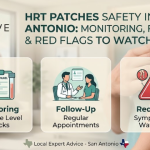

Are hormone patches safe, and what should you watch for once you start? For many women in San Antonio, TX, safety is the first question when menopause symptoms begin to disrupt sleep, mood, and daily routines. Patches are one of several delivery options. Like any treatment, they work best when a clinician reviews your health history, checks in regularly, and adjusts the plan as your needs change.
This guide explains how hrt patches work, who may be a candidate, how monitoring and follow-up usually look, and which warning signs deserve prompt medical attention. It is general education, not a substitute for individualized advice from a qualified healthcare professional.
What Are HRT Patches and How Do They Work?
HRT patches are thin, adhesive patches worn on the skin that deliver hormones, usually estradiol, steadily through the skin and into the bloodstream. This is called transdermal delivery. Because the hormone bypasses the digestive system and liver on its first pass, the body processes it differently than it does a pill.
A patch is usually applied to clean, dry skin on the lower abdomen or buttocks and replaced once or twice a week, depending on the product. Some patches contain only estrogen, while others combine estrogen with a progestogen. Your clinician chooses the type based on your symptoms, your health history, and whether you still have a uterus.
How Do Patches Compare With Other Forms of Treatment?
Patches are one form of hrt medication, alongside oral tablets, gels, sprays, vaginal products, and other options. Each has its own advantages and limitations. Some patients like patches because dosing is steady and there is no daily pill to remember. Others find skin irritation or adhesion problems frustrating.
In some research, transdermal estrogen has been associated with a lower risk of blood clots than oral estrogen for certain patients. That does not make it risk-free or right for everyone. A clinician weighs these factors against your personal and family history.
Who May Consider HRT Patches?
Patches may be considered by people with bothersome menopause symptoms such as hot flashes, night sweats, sleep disruption, and vaginal dryness. They may also be discussed for people who have had surgical menopause or early ovarian insufficiency. The decision is individual and should follow a full evaluation.
Estrogen replacement therapy is not appropriate for everyone. A clinician will usually be cautious or recommend alternatives if you have a history of certain cancers, blood clots, stroke, unexplained vaginal bleeding, or active liver disease. If you still have a uterus, estrogen is generally paired with a progestogen to protect the uterine lining.
What Is Involved in Choosing a Provider in San Antonio, TX?
Look for a provider who takes a thorough history, explains the risks and limits of treatment, and builds follow-up into the plan from the start. A hormone specialist San Antonio patients can reach conveniently may make it easier to keep appointments and stay on track with monitoring. Searches such as “hormone therapy near me” often surface many options, so it helps to compare how each practice handles evaluation and ongoing care.
Questions worth asking include how often follow-up visits happen, which tests are used, and how dose changes are handled. It is also reasonable to ask how the practice responds if you develop side effects between visits. Clear answers usually signal a careful, patient-centered approach.
How Are Patients Monitored While Using HRT Patches?
Monitoring usually starts before the first patch and continues for as long as you use treatment. The initial visit often includes a symptom review, medical and family history, blood pressure, and a discussion of preventive screenings such as mammograms. Your clinician may also order lab work depending on your situation.
Once treatment begins, many clinicians schedule a check-in within the first few months to see how symptoms are responding and whether the dose is right. After that, reviews are commonly yearly or as your health changes. The goal is to use the lowest effective dose for the shortest time that meets your needs, though some patients continue longer after shared decision-making.
What Role Do Labs and Testing Play?
Lab testing is not always required to start or adjust patches, but it can add useful context. Blood work may help rule out other causes of symptoms or check overall health markers that affect treatment decisions. Many practices use biomarker panels to look at hormone levels and related health indicators in one organized review.
Convenience matters because people are more likely to complete testing when it is easy. Some clinics offer mobile phlebotomy, which means a trained professional collects blood samples at your home or workplace. That can be helpful if you have a busy schedule or limited mobility.
Can Follow-Up Happen Virtually?
Many routine check-ins do not require an in-person visit. Telemedicine visits let you discuss symptoms, review lab results, and talk through dose adjustments from home. Some issues, such as a physical exam or a skin reaction that needs to be seen closely, may still call for an office visit.
What Are the Possible Side Effects of HRT Patches?
Common side effects tend to be mild and are often manageable with adjustments. Skin irritation at the application site is the most frequent complaint. Some patients also report breast tenderness, headaches, bloating, nausea, or mood changes, particularly in the first weeks.
Rotating application sites, applying the patch to clean and dry skin, and avoiding creams or oils on that area may reduce irritation. If side effects persist, your clinician may suggest a different dose, a different brand, or another delivery method. Do not stop or change treatment on your own without speaking with a professional.
What Should You Know About Patch Adhesion in Warm Weather?
San Antonio’s heat and humidity can affect how well a patch stays on, especially during outdoor activity or sweating. Peeling edges, early detachment, or reduced adhesion can lead to inconsistent dosing and a return of symptoms. If a patch falls off, ask your clinician how to replace it and whether the schedule should change.
Avoid placing a patch where clothing rubs or where skin folds often. Many patients can shower or swim with patches, but guidance varies by product, so check the instructions or ask your provider. Never apply a new patch directly over a previous site.
What Are the Red Flags to Watch For?
Most patients do well with monitoring, but some symptoms need prompt medical attention. Seek emergency care right away if you experience any of the following:
- Sudden chest pain or pressure
- Shortness of breath or trouble breathing
- Sudden severe headache or vision changes
- Weakness, numbness, or difficulty speaking
- Swelling, warmth, or pain in one leg
These can be signs of a blood clot, stroke, or heart problem. Do not wait for a scheduled appointment, and remove the patch only after you have contacted emergency services or your clinician for direction.
Which Symptoms Call for a Prompt Appointment?
Other changes are less urgent but still worth reporting soon. These include unexpected vaginal bleeding, a new breast lump, persistent nausea, yellowing of the skin or eyes, or a severe skin reaction that spreads beyond the patch site. Mood changes that feel intense or unmanageable also deserve attention.
Keep a short log of symptoms, patch changes, and any side effects between visits. That record helps your provider see patterns and make safer, more precise adjustments. Bring it to each check-in, whether in person or by video.
How Can Lifestyle Support Hormone Therapy?
Patches are only one part of managing menopause well. Regular movement, strength training, balanced nutrition, and good sleep habits can support bone health, mood, and energy alongside medical treatment. Limiting alcohol and avoiding smoking also matter, since both can affect cardiovascular and bone health.
San Antonio’s warm climate makes early-morning or evening walks a practical choice for much of the year. Staying hydrated and wearing breathable clothing can also make hot flashes and patch wear more comfortable. Stress-management practices such as mindfulness or consistent sleep routines may help too, though results vary from person to person.
How Much Does Hormone Therapy Cost?
Costs depend on the type of treatment, the dose, the follow-up schedule, any testing involved, and your insurance coverage. Because these factors vary so much, it helps to review clear pricing information before committing to a plan. Ask what is included in the visit, what lab work costs, and whether virtual follow-ups are billed differently.
Transparent costs make it easier to plan for long-term care rather than stopping treatment because of an unexpected bill. If a provider cannot explain what you will pay and why, consider asking for a written breakdown. That small step often prevents confusion later.
Conclusion
Safe use of hormone patches comes down to the right candidate, the right dose, and consistent follow-up. Monitoring, honest reporting of side effects, and knowing the warning signs give you the best chance of using treatment responsibly. Choosing a hormone specialist San Antonio residents trust can make that process smoother and more personal.
If you are considering estrogen replacement therapy or have questions about your current plan, schedule a conversation with a qualified provider. Bring your symptom history, your medication list, and your questions. A tailored plan, reviewed regularly, is far safer than guessing alone.
Frequently Asked Questions
Are HRT patches safe?
For many appropriately selected patients, patches can be used safely under medical supervision. Safety depends on your age, health history, dose, and how long you use treatment. A clinician can explain your individual risks and benefits.
How often should I follow up while using HRT patches?
Many clinicians check in within the first few months of starting or changing a dose, then at least once a year. You may need more frequent visits if you develop side effects or have other health conditions.
Do HRT patches require blood tests?
Not always. Some clinicians rely mainly on symptoms and health history, while others order labs to guide decisions. Your provider will recommend testing based on your situation.
What should I do if a patch causes skin irritation?
Remove the patch, wash the area gently, and rotate to a new site next time. If redness, itching, or swelling persists or spreads, contact your clinician for advice on switching products or doses.
Can I use HRT patches if I have a history of blood clots?
This requires a careful discussion with a healthcare professional. A history of clots may make hormone therapy unsuitable, or it may call for special precautions and alternatives.
How do I find a hormone specialist in San Antonio, TX?
Look for a licensed provider with experience in menopause care who offers clear follow-up plans and transparent costs. Asking about monitoring, virtual visits, and lab options can help you compare practices.