


For automotive dealers and vehicle distributors, expanding an SUV portfolio requires more than identifying a popular model. A successful purchasing decision depends on customer demand, vehicle configuration, supplier reliability, delivery planning, and the cost of maintaining inventory.
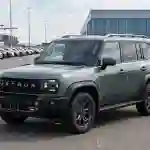
The Jetour T2 has attracted interest in international markets because of its rugged styling, SUV proportions, and modern cabin design. Known as the Jetour Traveller in China, it is available in different configurations depending on the model year and market. For businesses considering bulk purchases, understanding these variations is essential before negotiating with a China vehicle exporter.
Whether you supply retail customers, fleet buyers, or regional distributors, a structured procurement strategy can help you select suitable vehicles and manage purchasing risks.
1. Match the Jetour T2 Configuration to Customer Demand
Not every customer looks for the same SUV specification. Some buyers prioritize engine performance and four-wheel drive, while others focus on daily usability, interior features, and purchase price.
The China-market Jetour Traveller has been offered with different powertrain configurations, including 1.5T and 2.0T gasoline variants in selected model years. The international Jetour T2 lineup also varies by market and trim. Certain versions feature a 2.0T turbocharged engine with torque of up to 390 Nm, while transmission and drivetrain options depend on the specific configuration.
Before placing a bulk order, dealers should establish which version best fits their target customers.
Key questions include:
-
Is a 2.0T engine required, or would another available configuration suit the market?
-
Do customers expect four-wheel drive?
-
Which interior, infotainment, and driver-assistance features are important?
-
Are buyers more concerned about purchase price or a particular equipment package?
-
Does the destination market permit the selected vehicle specification?
A clearly defined specification reduces the likelihood of receiving vehicles that are difficult to position in the local market.
2. Evaluate the Market Before Committing to Inventory
A vehicle's popularity in one country does not guarantee the same sales performance elsewhere. Before purchasing multiple Jetour T2 SUVs, dealers should assess local competition, customer budgets, fuel preferences, and the availability of comparable models.
The analysis should also consider the intended sales channel. Retail customers may prioritize styling, comfort, and technology, while fleet or commercial buyers may pay more attention to operating costs, service access, and delivery schedules.
For importers, it can be useful to compare the Jetour T2 with other SUVs in a similar price and size category. This helps clarify the model's position and identifies the features that matter most to prospective buyers.
Rather than ordering a large quantity based only on an attractive quotation, dealers should connect purchasing volume to realistic sales forecasts and available working capital.
3. Compare Suppliers Beyond the Quoted Vehicle Price
When sourcing a Jetour T2 from China, the lowest quoted price should not be the only selection criterion. Differences in vehicle configuration, shipment terms, documentation, and delivery arrangements can affect the final cost.
A professional vehicle export supplier should be able to clarify the following information before an order is confirmed:
Vehicle availability: Confirm the model year, production status, trim, engine, transmission, drivetrain, and optional equipment.
Quotation terms: Establish whether the quotation is FOB, CIF, or based on another agreed delivery arrangement.
Export documentation: Confirm which documents the supplier will prepare and which responsibilities remain with the buyer.
Payment and delivery schedule: Clarify payment milestones, estimated production or preparation time, and shipping arrangements in the written agreement.
Inspection arrangements: Agree on what information, photographs, videos, or inspections will be provided before shipment.
These details give procurement teams a clearer basis for comparing suppliers and help reduce misunderstandings during the transaction.
4. Calculate the Real Cost of Bulk Vehicle Procurement
For dealers, profitability depends on the total acquisition cost rather than the vehicle price alone.
A bulk order may involve inland transportation, international freight, insurance, customs clearance, import duties, taxes, compliance checks, and local delivery expenses. The applicable charges depend on the shipment terms and destination country.
| Cost factor | Why it matters |
|---|---|
| Vehicle purchase price | Determines the starting acquisition cost |
| Freight and insurance | Affects the cost of moving vehicles internationally |
| Duties and taxes | Varies by destination and import arrangements |
| Compliance and inspection | May involve additional costs before registration |
| Local transportation | Adds costs between the arrival port and final destination |
| Parts and after-sales support | Influences the ongoing customer service commitment |
When comparing export quotations, ensure that the same vehicle configuration and comparable delivery terms are used. An FOB quotation should not be directly compared with a CIF quotation without accounting for the additional services included in the latter.
Dealers should also leave room for currency movements, shipping changes, and other expenses that may arise before the vehicles are ready for sale.
5. Check Compliance and After-Sales Requirements Early
Vehicle import rules vary across markets, and compliance should be reviewed before a large order is placed.
For the UAE, buyers should confirm applicable conformity requirements, customs documentation, and registration eligibility. For Saudi Arabia, importers should check relevant Saudi Standards, Metrology and Quality Organization (SASO) requirements and the applicable vehicle import procedures.
Other markets may impose different rules relating to vehicle age, emissions, safety equipment, technical documentation, and registration.
After-sales planning is equally important. Dealers should investigate spare-parts availability, maintenance requirements, warranty eligibility, and access to technical support. Warranty coverage for a locally distributed vehicle should not automatically be assumed to apply to an independently imported China-spec Jetour Traveller or Jetour T2.
Clear answers to these questions help dealers assess whether the vehicle can be supported throughout its sales and ownership cycle.
6. Plan Order Quantities and Delivery Schedules Carefully
Bulk purchasing may improve procurement efficiency, but ordering too many vehicles can tie up working capital and increase inventory pressure.
A more practical approach is to align order quantities with sales forecasts, delivery capacity, and the expected time required to complete import procedures. Dealers should also confirm whether the supplier can provide the same configuration consistently across multiple vehicles.
For larger orders, reviewing a sample vehicle's specification and documentation before confirming the full batch can help identify potential issues early.
Delivery planning should account for vehicle preparation, export documentation, shipping schedules, port handling, and destination-country clearance. These steps are especially important when stock is being purchased for a specific sales period or customer commitment.
Source Jetour T2 SUVs Through Moluoni Group
Nanchun International, part of Moluoni Group, supports overseas buyers sourcing vehicles from China, including automotive dealers, importers, and distributors serving markets in Africa and the Middle East.
Its vehicle export services include sourcing assistance, specification confirmation, export documentation, and international shipping coordination.
Businesses interested in the Jetour T2 2.0T 4WD SUV for export can review the available product information here:
Explore Jetour T2 2.0T 4WD SUV for Export
When requesting a quotation, provide the preferred model year, configuration, quantity, and destination port. Clear requirements help the export team assess availability and prepare a quotation based on the intended purchase.
Conclusion
Bulk purchasing Jetour T2 SUVs requires a balanced assessment of market demand, vehicle specifications, supplier capabilities, import compliance, and total acquisition costs.
For automotive dealers, the goal is not simply to secure a low purchase price. It is to source vehicles that match customer expectations, arrive with the necessary documentation, and can be supported after delivery.
By confirming specifications early, comparing quotations on a consistent basis, and planning inventory around realistic demand, businesses can make more informed sourcing decisions when working with a China vehicle exporter.