


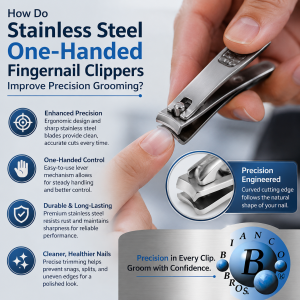
What Keeps Professional Tools Sharp, Strong, and Accurate Across Nail, Surgical, and Salon Work?

A nipper with a rolled edge crushes the cuticle. The client feels a pinch, and the skin tears at the edge. A cuticle nipper sharpening service restores the blade edge and returns the tool to normal use.
Other tools fail in different ways. A bone cutter with a loose pivot wastes hand force and slips on the cut line. A dye cup with faded marks leads to wrong ratios and uneven color. Nail, surgical, and salon tools wear in three separate ways, so each needs its own check.
Why Do Nail Tools Lose Their Edge?
Nail keratin is hard on steel. Each cut wears the blade edge by a small amount. Moisture speeds corrosion at the joint. A drop onto tile can bend the tips out of line. Tips that cross or gap tear the nail plate instead of slicing it. Dull nippers also need extra hand pressure, which raises the risk of a slip.
Watch for these signs:
- Fraying along the cut line
- Jaws grab and slip
- Tips no longer meet
- Rust spots near the joint
A technician restores the edge, corrects tip alignment, and tests the cut. Cleaning after each client stops residue from hardening on the blade. Sterilization instructions from the maker protect the steel during each cycle.
What Gives a Cutting Tool Its Strength?
A surgical instrument for cutting bone must resist flex under heavy load. Thick jaws, hardened alloy, and a tight pivot send force to the tip.
Podiatry work shows the range. Double-action nail and bone cutters use a compound joint to multiply hand force. Rongeurs remove bone in small bites. Elevators lift tissue from bone, and retractors hold tissue clear of the work area.
Close tolerances in manufacturing give smooth joints and even cuts. A joint with play wastes force and blunts control. Material quality and proper care both matter for instrument life. Follow the instructions for each tool to help protect its finish and working parts.
How Does a Salon Keep Color Results Accurate?
Hair color follows a formula. Dye and developer must meet in set ratios, or shade and lift will shift. A measuring cup for hair dye turns the formula into a repeatable step.
Check these points on any cup:
- Markings readable after many washes
- Ounce and milliliter scales
- A smooth, stain-resistant wall
- A narrow lip for clean pours
What Daily Habits Protect All Three Tool Types?
Wipe each tool after use, dry it, and store it apart from loose metal. Schedule a check of every edge, joint, and scale each month. Plan a sharpening service for cuticle nippers before cuts turn ragged, not after.
Retire any surgical instruments with a bent jaw or a cracked joint, since repair does not restore full strength. Replace cups with worn scales as well.
Final Thought
Nippers need regrinding when cuts fray. Bone cutters need replacement when jaws bend or joints loosen. Dye cups wear out when scales fade. These three signs keep each tool within safe limits, and a hair dye measuring cup, marked with readable lines, keeps every formula on target.
Based in New York, Bianco Brothers offers American-made podiatry, dental, beauty, and culinary instruments. Its services include instrument sharpening and sterilization guidance, and orders above $500 ship free in the United States and Canada. Customers can view the full catalog and shop for the instruments needed.