

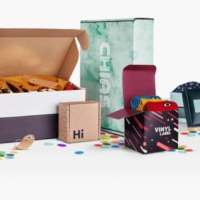
Gable packaging boxes are popular for their convenient handles, distinctive shape, and attractive presentation. They are commonly used for gift sets, bakery products, promotional kits, cosmetics, and specialty retail items. However, while the outer box may look appealing, its ability to hold the contents securely is equally important.
This is where custom inserts can make a meaningful difference. An insert is an internal component designed to hold products in position, separate individual items, or provide additional cushioning where necessary. Depending on the product, it may be as simple as a fitted cardboard divider or as specialized as a molded tray.
Not every gable box needs extra internal support. Lightweight, durable products may remain secure without it, while fragile, irregularly shaped, or multiple-item packages may benefit considerably from a customized interior.
Understanding when to add inserts helps businesses protect their products, improve presentation, and avoid unnecessary packaging expenses.
When the Product Moves More Than the Box Can Safely Accommodate
One of the strongest reasons to consider custom inserts is excessive movement inside the package. Even when a gable box has suitable external dimensions, the available interior space may allow its contents to shift during carrying or transportation.
This movement can lead to scratches, damaged corners, broken components, or an untidy presentation when the customer opens the box.
For example, a business selling glass candle holders may find that an appropriately sized outer box still leaves gaps around the product. A fitted insert can reduce this movement by holding the item in a stable position.
Before adding internal support, evaluate how much clearance exists around the product and whether movement creates a genuine risk. If the item already fits securely and can withstand normal handling, a separate insert may not be necessary.
The goal is to eliminate problematic movement rather than fill every available space with additional material.
Why Fragile Products Often Need More Than an Attractive Outer Box
The structural strength of a gable box does not automatically guarantee sufficient protection for fragile contents. The outer packaging helps contain the product, but it may not prevent individual items from colliding with one another or experiencing concentrated pressure.
Glass containers, delicate ornaments, ceramic accessories, and certain cosmetic products may need additional internal support.
Custom inserts can create dedicated compartments, maintain separation, and provide cushioning when designed with suitable materials and clearances. Their effectiveness depends on the product's fragility, weight, shape, and expected handling conditions.
For instance, a gift box containing several small glass bottles may benefit from individual compartments that keep the bottles apart. Without these divisions, the containers could strike one another when the package is tilted or moved.
However, an insert should not be treated as a substitute for appropriate shipping protection. Products traveling through demanding distribution networks may also require an outer shipping carton and additional protective measures.
When Multiple Products Need Their Own Defined Space
Packaging several items together introduces a different challenge from packaging a single product. Each component must remain organized, accessible, and protected throughout normal handling.
A gable box containing assorted chocolates, skincare products, stationery items, or corporate gifts may benefit from a compartmentalized insert.
These internal sections can prevent products from overlapping, reduce unwanted contact, and make the arrangement look intentional when the customer opens the package.
Consider a business preparing employee welcome kits with a notebook, pen, reusable bottle, and small promotional accessories. A fitted insert can give each item a designated place, making the contents easier to organize and present.
The insert should be designed around the actual product dimensions rather than relying on approximate measurements. Compartments that are too loose may allow movement, while excessively tight openings can make products difficult to remove.
When multiple items are sold as a coordinated set, internal organization can improve both practical usability and perceived product quality.
How Custom Inserts Improve the Unboxing Experience
Protection is not the only reason to add internal support. Inserts can also influence how customers discover and interact with the products inside a package.
A carefully arranged interior can make a gift set look more organized and give each item a clear place. This is particularly valuable for premium gifts, promotional packages, and products where presentation contributes to the overall buying experience.
Imagine opening a gable box containing a collection of handmade soaps. If the soaps are arranged neatly in separate sections, the presentation feels deliberate. If they slide around and arrive in a disorganized pile, the same products may appear less carefully prepared.
Custom inserts can also help position labels, decorative elements, and product accessories so that the contents look consistent across orders.
Nevertheless, the interior should remain practical. An elaborate insert that makes products difficult to remove or creates excessive packaging waste may reduce convenience instead of improving it.
The best design combines visual organization with easy access and reliable product positioning.
Choosing Between Cardboard Dividers, Paperboard Trays, and Molded Inserts
Different products require different forms of internal support. The appropriate insert depends on the shape, weight, fragility, and presentation requirements of the contents.
Cardboard dividers
Cardboard dividers are useful when several items need to remain separated. They are often suitable for bottles, jars, small containers, and gift sets containing multiple components.
Fitted paperboard inserts
Paperboard inserts can be cut and folded to create product-specific compartments or supporting structures. They may be a practical option when businesses want internal organization that coordinates with the outer gable box.
Molded inserts
Molded inserts can be designed around particular product shapes and may provide useful positioning for delicate or irregular items. Their suitability depends on the chosen material, manufacturing method, production quantity, and environmental requirements.
Protective cushioning
Foam or other cushioning materials may be appropriate when a product needs additional impact protection. However, the material must be compatible with the product and intended use, and its environmental and disposal implications should be considered.
There is no universally superior insert type. Businesses should compare protective performance, material use, appearance, assembly requirements, and total cost before making a decision.
When Product Shape Makes Standard Packaging Less Reliable
Some products are difficult to secure because their shapes do not correspond neatly to a conventional box interior.
Items with curved surfaces, narrow bases, protruding components, or uneven dimensions may tilt or rotate during handling. Even lightweight products can become disorganized if their shape allows them to move freely.
Custom inserts can create contact points that support these products more effectively than an empty box.
For example, a business packaging a small decorative bottle may need a shaped recess that keeps the bottle upright. A collection of differently sized accessories may require several individually designed compartments.
The design should accommodate the product's actual geometry, including caps, handles, delicate projections, and any components that could be damaged by pressure.
Whenever possible, create the insert using accurate product measurements and test the complete arrangement before production. This helps ensure that the internal support improves stability without making packing or unpacking unnecessarily difficult.
When the Handle and Outer Structure Need Additional Internal Support
Gable boxes are designed around a distinctive upper section that forms the handle. Although this feature makes them convenient to carry, the complete package must still be appropriate for the weight and distribution of its contents.
If products are concentrated on one side or placed unevenly inside the box, the package may become unbalanced during carrying.
An insert can sometimes help distribute the contents more evenly, keep individual items in position, and reduce unwanted shifting. However, internal inserts cannot compensate for an inadequately designed handle, weak base, or unsuitable board grade.
For heavier products, evaluate the entire packaging structure rather than focusing exclusively on the insert.
Check the handle construction, closure, bottom panel, and the way the load is distributed across the box. Test the finished package using the actual contents and realistic handling conditions.
The objective is to create a coordinated structure in which the outer box carries the load appropriately and the interior keeps the products arranged securely.
How Shipping Conditions Change the Need for Internal Support
A product carried directly from a retail counter to a nearby location may face different handling conditions from one shipped across the country.
During transportation, packages may experience vibration, repeated handling, stacking pressure, and accidental impacts. The level of protection required depends on the product, distribution method, and packaging arrangement.
For local retail purchases, an insert may primarily need to prevent products from moving or colliding. For shipped orders, it may need to work alongside cushioning and a suitable outer shipping carton.
A gable box used as presentation packaging should not automatically be assumed to provide sufficient protection for parcel delivery.
Businesses should evaluate the complete shipping configuration, including the space between the gable box and the outer carton, the placement of cushioning, and the stability of the contents.
Where products are fragile or valuable, appropriate testing under representative distribution conditions can help reveal whether the internal support is sufficient.
When Food Packaging Requires a More Carefully Designed Interior
Food businesses often use gable boxes for cookies, cupcakes, confectionery, bakery assortments, and takeaway treats. In these applications, internal support can help preserve product arrangement and reduce damage during carrying.
For example, a box containing several decorated cupcakes may need a fitted tray with openings that hold the bases in place. Without appropriate support, the cupcakes may tilt, allowing the icing to touch the box or neighboring products.
However, food packaging requires more than a snug fit. Materials that come into direct contact with food must be suitable for the intended application and comply with applicable food-contact requirements.
The insert should also allow the product to be placed inside and removed without unnecessary contact or damage. Depending on the food, moisture resistance, grease resistance, ventilation, and temperature conditions may influence the material choice.
A custom insert is useful when it solves a specific product-handling problem while maintaining appropriate food safety and packaging performance.
Balancing Insert Customization With Packaging Costs
Custom inserts can improve product protection, but they also introduce additional costs. These may include material, tooling, design, manufacturing, assembly, storage, and extra packing time.
The financial decision should therefore consider both the cost of adding an insert and the potential cost of operating without one.
For example, a business selling fragile gift sets might spend more per package on internal compartments. If those compartments meaningfully reduce product damage, replacements, and customer complaints, the additional investment may be justified.
By contrast, adding a fitted insert to a durable product that already remains secure may provide little practical benefit.
A useful way to assess the decision is to compare two complete packaging options:
The outer gable box without an insert, including any additional protective materials required.
The outer gable box with the proposed insert, including manufacturing and assembly expenses.
Also consider the cost of damaged goods, returns, wasted stock, and inconsistent presentation. These factors can influence the overall value of the packaging solution.
The aim is not to eliminate insert costs but to ensure that the added component solves a worthwhile problem.
How to Prevent Custom Inserts From Becoming a Source of Waste
An insert should improve packaging performance without introducing unnecessary material or complexity.
Oversized compartments, excessive cushioning, and elaborate internal structures can increase material consumption while making the package harder to assemble or recycle.
Start by identifying the specific movement or damage risk that needs to be controlled. Then design the smallest practical structure that provides adequate support.
For example, a simple folded paperboard divider may be sufficient to separate two products that would otherwise collide. A complex molded tray may be unnecessary if the products are already stable and durable.
Material compatibility also matters. When recyclability is a priority, consider whether the insert and outer box can be easily separated and processed through the recycling systems available to customers.
Environmental performance depends on the complete packaging design and local disposal infrastructure, so avoid assuming that a particular insert is automatically more sustainable than every alternative.
Test the Insert Before Ordering Packaging in Bulk
A custom insert can appear suitable in a design file but perform poorly once manufactured and combined with the actual product.
The insert may be too loose, too tight, difficult to assemble, or incompatible with the dimensions of the finished gable box. These problems are easier to correct during sampling than after a large production order.
A practical testing process should include several checks.
- Fit and stability: Confirm that the product sits correctly and does not move excessively during ordinary handling.
- Ease of packing: Check whether staff can place the products into the insert quickly without forcing them into position.
- Customer accessibility: Ensure that customers can remove the contents without damaging the product or struggling with the packaging.
- Structural compatibility: Verify that the insert fits the assembled gable box and does not interfere with the handle, closure, or base.
- Protection during transportation: Where relevant, evaluate the complete packaging arrangement under representative handling and shipping conditions.
Testing should reflect the actual product and its expected use. If a package contains multiple products, test the complete assortment rather than assessing each item separately.
This process helps businesses identify design weaknesses and determine whether the insert delivers enough benefit to justify its cost.
When a Standard Insert Is Enough and When a Fully Custom Design Is Better
Not every product requires an insert designed from scratch. In some cases, a standard divider or simple folded support can provide sufficient stability at a lower cost.
Standard inserts may work well when products have common dimensions, require basic separation, or do not need precise positioning.
Fully customized inserts become more valuable when products have unusual shapes, fragile components, tightly controlled presentation requirements, or multiple items that must fit together in a particular arrangement.
Production volume also matters. A highly specialized insert may be easier to justify for a recurring, high-volume product than for a short promotional run.
Businesses should compare available standard options before investing in a completely bespoke structure. If an existing insert provides the required protection and fits the gable box properly, further customization may not be necessary.
The right level of customization is the minimum complexity needed to achieve reliable performance and a suitable customer experience.
Final Thoughts: When Does Your Gable Box Need Extra Internal Support?
Gable packaging boxes with custom inserts are most useful when the product needs better positioning, separation, cushioning, or a more organized presentation than the outer box can provide on its own.
Fragile items, irregularly shaped products, multi-item gift sets, decorated bakery products, and packages exposed to demanding shipping conditions are common situations in which internal support deserves careful consideration.
However, inserts are not essential for every product. Durable items that fit securely inside a suitably designed gable box may perform perfectly well without additional components.
Before investing in custom inserts, assess the product's weight, shape, fragility, handling conditions, and presentation requirements. Compare suitable materials, test a physical sample, and calculate the complete packaging cost.
Ultimately, the best insert is not necessarily the most elaborate one. It is the one that provides the protection and organization your product genuinely needs while keeping the packaging practical, attractive, and cost-effective.
Read More Information: https://ibexpackaging.com/gable-boxes/