


Industrial organizations rely on thousands of physical assets to keep production, infrastructure, and critical operations running. Pumps, turbines, compressors, motors, transformers, production equipment, pipelines, and other assets must operate safely and efficiently for businesses to meet performance goals. Yet as assets become more complex and operational environments become more demanding, traditional maintenance approaches are no longer enough.
This is where Asset Performance Management is becoming a strategic priority. Modern APM platforms combine asset data, analytics, artificial intelligence, condition monitoring, reliability engineering, and lifecycle planning to help organizations understand asset health and make better maintenance decisions.
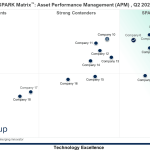
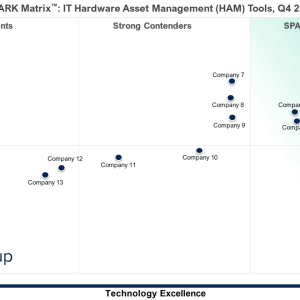
QKS Group’s Asset Performance Management market research examines the global landscape, including emerging technology trends, market trends, future outlook, competitive dynamics, and vendor capabilities. The research also uses the proprietary SPARK Matrix analysis to evaluate leading vendors based on their technological capabilities and market impact.
Click Here For More Information: https://qksgroup.com/market-research/spark-matrix-asset-performance-management-q3-2025-8983
Why Asset Performance Management Matters
Asset-intensive organizations face a constant challenge: maximizing asset availability while controlling maintenance costs and operational risks.
Unexpected equipment failures can result in production stoppages, expensive emergency repairs, safety incidents, and missed business targets. At the same time, excessive preventive maintenance can increase labor and spare-parts costs without necessarily improving asset reliability.
APM platforms help organizations move toward a more intelligent maintenance model. Instead of relying only on fixed maintenance schedules, organizations can use real-time asset information and analytics to understand when an asset requires attention and what action should be taken.
This shift enables maintenance teams to prioritize high-risk assets, identify potential failures earlier, and allocate resources more effectively.
From Preventive to Predictive Maintenance
One of the most important changes in modern asset management is the transition from preventive maintenance toward predictive and prescriptive approaches.
Preventive maintenance typically follows predetermined schedules. Predictive maintenance, in contrast, uses data from sensors, control systems, maintenance records, and other sources to identify patterns associated with asset degradation.
AI and machine learning can analyze these large volumes of data to identify anomalies and potential failure conditions. Prescriptive capabilities can go one step further by recommending suitable actions based on asset condition, risk, operational priorities, and business impact.
This approach can help organizations reduce unnecessary maintenance while improving equipment reliability.
Digital Twins Strengthen Asset Intelligence
Digital twin technology is also becoming an important component of APM strategies. A digital twin creates a digital representation of a physical asset or system, allowing organizations to understand its behavior and performance using operational and historical data.
When integrated with APM capabilities, digital twins can support simulation, scenario analysis, performance optimization, and lifecycle planning. Organizations can assess how changing operating conditions could affect asset performance before implementing changes in the physical environment.
This creates opportunities for more proactive decision-making and better coordination between engineering, maintenance, and operations teams.
Check SPARK Plus Study Here: https://qksgroup.com/sparkplus?market-id=93&market-name=asset-performance-management
Key Technology Trends Shaping APM
The evolution of APM is closely connected with broader developments in industrial technology. Several trends are influencing the market:
- Artificial intelligence and machine learning are improving anomaly detection, failure prediction, and maintenance recommendations.
- IoT and connected sensors are expanding access to real-time equipment condition data.
- Cloud-based platforms are making APM capabilities more scalable and accessible across distributed operations.
- Advanced analytics are helping organizations connect asset health with operational and financial outcomes.
- Digital twins are supporting simulation, optimization, and asset lifecycle strategies.
- Automation is reducing manual analysis and accelerating maintenance workflows.
- Integrated enterprise platforms are connecting APM with ERP, EAM, MES, SCADA, and other operational systems.
Together, these technologies are helping organizations build a more connected and data-driven asset management environment.
The Business Impact of Intelligent Asset Management
The value of APM extends beyond maintenance departments. Better asset performance can influence production efficiency, operational resilience, safety, sustainability, and overall financial performance.
By identifying asset risks earlier, organizations can reduce the likelihood of unplanned downtime. Better maintenance planning can also improve workforce utilization and spare-parts management. Asset lifecycle insights can help decision-makers determine whether an asset should be repaired, upgraded, replaced, or operated differently.
APM can therefore support a shift from reactive problem-solving to long-term asset strategy.
For senior executives, this creates a stronger connection between technology investments and business outcomes. Rather than viewing asset management as a maintenance function alone, organizations can treat asset performance as an important contributor to operational competitiveness.
Evaluating the Competitive APM Landscape
As organizations consider APM investments, evaluating vendors based only on individual features can be challenging. Different platforms may offer varying strengths across analytics, reliability management, asset monitoring, digital twins, AI, integration, usability, and industry-specific capabilities.
QKS Group’s research addresses this challenge through detailed competition analysis and vendor evaluation using the proprietary SPARK Matrix. The analysis ranks and positions leading Asset Performance Management vendors with global impact, helping technology buyers understand competitive differentiation and vendor positioning.
The study includes vendors such as ABB, AspenTech, AVEVA, Baker Hughes, Bentley Systems, Emerson, GE Vernova, Hexagon AB, Hitachi Energy, Honeywell, IBM, IPS Energy, Rockwell Automation, SAP, SymphonyAI Industrial, Upkeep, Xempla, and Yokogawa.
Building the Next Generation of Industrial Operations
The future of APM is moving toward a more integrated model where asset intelligence becomes part of everyday operational decision-making. As industrial organizations connect more equipment, collect more data, and adopt increasingly sophisticated AI technologies, APM platforms are expected to play a central role in converting operational data into actionable insights.
According to Akaash R, Senior Analyst at QKS Group, an APM platform is an integrated software solution designed to monitor, assess, optimize, and extend the performance and reliability of physical assets across industrial enterprises. Its capabilities can include real-time condition monitoring, predictive and prescriptive maintenance, reliability-centered maintenance, risk analytics, digital twin simulation, and lifecycle strategy planning.
By bringing these capabilities together, APM platforms provide organizations with a unified view of asset health and performance. This can help improve operational resilience, optimize asset utilization, support regulatory compliance, and strengthen return on asset investment.
Download Sample Report Here: https://qksgroup.com/download-sample-form/spark-matrix-asset-performance-management-q3-2025-8983
Conclusion
Asset performance is becoming increasingly important as organizations manage complex infrastructure, rising operational expectations, and pressure to improve efficiency. Modern APM platforms provide the intelligence needed to understand asset condition, anticipate risks, prioritize maintenance, and make informed lifecycle decisions.
The combination of AI, IoT, analytics, digital twins, cloud computing, and automation is reshaping how industrial organizations manage physical assets. For technology buyers, understanding these capabilities and evaluating vendor differentiation will be essential to building an effective APM strategy.
QKS Group’s Asset Performance Management research and SPARK Matrix analysis provide a structured perspective of the competitive landscape, helping organizations assess vendor capabilities and identify technologies aligned with their operational and strategic priorities.