
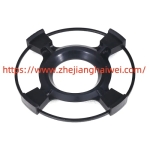

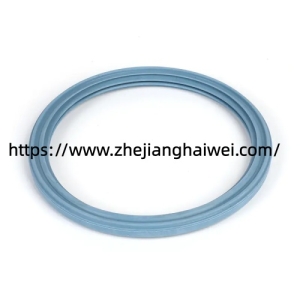
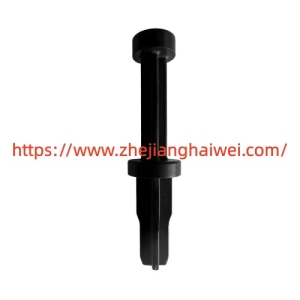
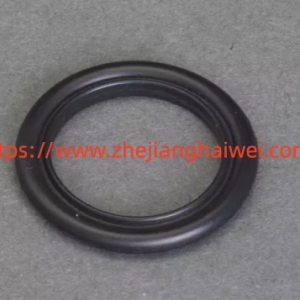
Special Shape Seal Rings provide practical answers for engineers facing non standard fluid containment challenges in machinery. Conventional circular items frequently leave gaps when housings feature irregular grooves multi direction interfaces or combined static dynamic motion. In those situations teams seek molded elastomer barriers that follow the exact contour of the cavity and maintain contact under load.
The decision usually begins with a review of the operating environment. Temperature range chemical exposure pressure levels and movement type all influence the compound selection. Nitrile works well with oils and fuels across moderate heat. Fluorocarbon handles aggressive chemicals and higher temperatures. Silicone offers flexibility at low temperatures while ethylene propylene resists steam and brake fluids. Once the compound is fixed the geometry is refined so the part fills the groove completely and recovers after compression. Cross section can be rectangular D form X form or fully custom to distribute stress evenly and reduce the chance of extrusion.
Manufacturing support plays a large role. Close collaboration between design teams and the producer allows rapid prototyping of the profile. Soft tooling or 3D printed molds speed early samples so fit and function can be checked on the actual hardware. Dimensional reports and material certificates accompany each batch giving clear traceability. Surface finish on the part is controlled to limit friction against mating metal or plastic surfaces. This attention reduces wear and extends service intervals.
Installation practices also matter. Correct groove dimensions proper stretch limits and clean surfaces prevent damage during assembly. A light film of compatible lubricant can ease placement without swelling the elastomer. Once seated the barrier should sit evenly with no twists. Periodic inspection during maintenance helps confirm that the contact face remains intact and free of cuts or permanent set.
Across industries the same pattern appears. Pump and compressor builders use profiled barriers around shafts that experience both rotation and axial shift. Valve manufacturers rely on them for multi port bodies where a single circular item cannot cover all sealing faces. Automotive and mobile equipment designers incorporate them in transmission housings and hydraulic blocks that combine several functions in compact packages. In each case the driver is the same: the standard catalog item simply does not match the geometry or the combined loads.
Zhejianghaiwei supplies these tailored elastomer barriers with consistent compound quality and dimensional control. The company works from customer drawings or samples and returns functional prototypes in a practical timeframe. Production runs stay stable through process monitoring and batch testing.
Choosing the right profiled barrier early in a project avoids later redesigns and field failures. Engineers who map the interface loads and chemical exposure first then select both material and geometry accordingly report fewer leakage events and longer mean time between interventions. Clear communication of groove tolerances and surface finish requirements further improves results.
For available compounds profiles and technical support visit https://www.zhejianghaiwei.com/product/ to review options that match your current equipment needs.