

Mechanical designers routinely select torsion springs for applications requiring rotational force, yet confusion persists regarding the functional differences between single and double configurations. The distinction appears simple at first glance but carries implications for torque transmission, space utilization, and stress distribution. Engineers who understand these differences can specify springs that optimize performance while minimizing physical footprint. What is the difference between a Single Torsion Spring and a double torsion spring? Ndlspr, operating through Ningdeli Spring, manufactures both configurations with attention to the structural and operational distinctions that determine appropriate application.
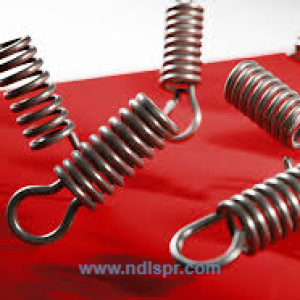
The fundamental structural difference between these spring types lies in their coil arrangement. A Single Torsion Spring consists of one continuous helical coil with two extending legs that transmit torque to the attached components. The coil winds in one direction along its axis, and the legs project from either end of the coil. When a load applies rotational force, the coil stores energy through deflection of its wire cross-section. This single-coil design provides straightforward torque generation with predictable performance characteristics. Double torsion springs, conversely, feature two separate coils wound in opposite directions, connected by a common center section. The legs extend from the outer ends of each coil, creating a spring that applies torque from both coils simultaneously or in sequence, depending on the leg configuration.
Space utilization differs significantly between the two designs. A Single Torsion Spring occupies a compact footprint along its axis, requiring only the length of its coil and sufficient clearance for its legs. This compactness makes it suitable for applications where axial space is limited. Double torsion springs require additional axial space to accommodate two coils separated by a center section, yet they offer advantages in applications requiring higher torque output within a given radial envelope. The double configuration distributes the applied load across two coils, potentially reducing stress on individual wire sections and extending fatigue life. Ndlspr engineers evaluate these spatial trade-offs when recommending specific configurations for customer applications.
Torque transmission characteristics distinguish the two designs in operation. A Single Torsion Spring applies torque through its legs in a single direction, with the coil winding either clockwise or counterclockwise depending on the intended rotation. This simplicity allows predictable force generation and straightforward installation orientation. Double torsion springs can produce opposing torque directions from their two coils, enabling applications that require counter-rotation or balanced force distribution. The double configuration also permits higher total torque output because the load divides between two coils, each contributing its share of the total resistance. This capacity makes double springs suitable for heavy-duty applications where a single coil would require excessive wire diameter.
Stress distribution within the spring material differs between the two configurations. A Single Torsion Spring concentrates stress throughout its continuous coil, with maximum stress occurring at the point of maximum deflection. This stress concentration limits the spring's fatigue life if the application involves frequent cycling. Double torsion springs distribute the applied load across two coils, reducing the stress on each individual wire. This distribution can provide improved fatigue resistance in applications involving thousands of cycles per day. The center section connecting the two coils introduces additional stress points that require careful design to prevent premature failure. Ndlspr applies finite element analysis to both configurations to optimize stress distribution and predict service life.
Manufacturing complexity varies between the two types. Single Torsion Springs require straightforward coiling operations with standard machinery, allowing efficient production and quality control. Double torsion springs demand more sophisticated tooling and process control to maintain consistent coil alignment, proper center section geometry, and accurate leg positioning. The additional manufacturing steps increase production time and cost. Ndlspr maintains dedicated production lines for both configurations, with specific coiling machines optimized for each design. The factory's quality control system includes dimensional inspection of the center section and verification of coil orientation for double springs.
Application examples illustrate the practical distinctions. Single Torsion Springs commonly appear in automotive pedal return mechanisms, where one leg anchors to a fixed point and the other attaches to the pedal arm. The single coil provides adequate torque while occupying minimal axial space. Double torsion springs often serve in garage door counterbalance systems, where two coils working together generate sufficient torque to offset door weight. The double configuration distributes the load over a wider area, reducing component stress and extending service life. Ndlspr supplies both types to automotive, industrial, and building hardware customers, tailoring configurations to specific application requirements.
Cost considerations influence design decisions. Single Torsion Springs generally cost less than double springs of equivalent wire diameter and torque capacity because of reduced material content and simpler manufacturing. Double springs use more wire and require additional processing time. However, double springs may prove economical in applications where a single spring would need oversize wire or exotic materials to meet torque requirements. The total cost comparison should include not just the spring price but also the associated savings from reduced space requirements, longer service life, and lower replacement frequency. Ndlspr helps customers evaluate these trade-offs through application engineering support.
Installation and maintenance practices differ between the two configurations. Single Torsion Springs install with straightforward leg attachment, typically requiring simple fixtures to hold the legs during assembly. Double springs require precise alignment of the center section and careful orientation of both coils to ensure proper operation. Maintenance procedures for double springs often involve inspection of the center section for wear or distortion, a check not required for single springs. Ndlspr provides installation guidelines specific to each spring type, reducing setup errors and improving operational reliability.https://www.ndlspr.com/ presents technical specifications and application examples for the single configuration, enabling engineers to compare the available options directly. The product documentation includes torque values, dimensional drawings, and recommended installation practices. Engineers and maintenance professionals can request both single and double torsion spring quotes from the same manufacturer, simplifying procurement and ensuring consistent quality across spring types. Does your mechanical system call for the simplicity of a Single Torsion Spring, or does the increased capacity of a double torsion spring match your performance requirements?