
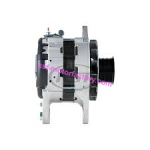

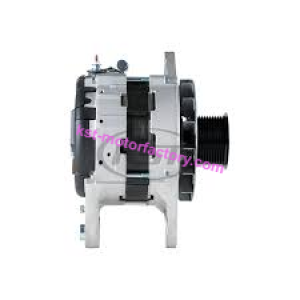
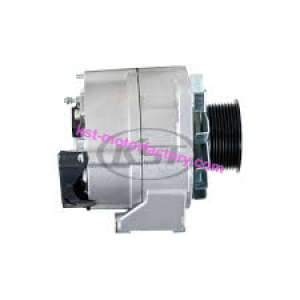
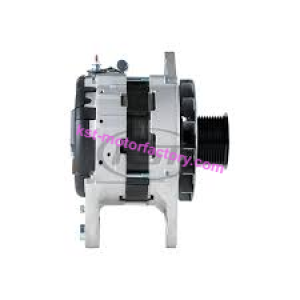
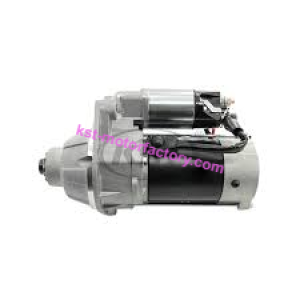
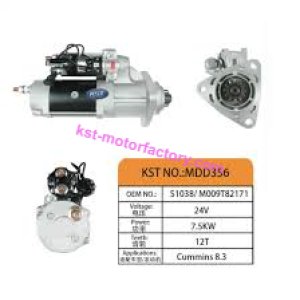
Equipment owners face ongoing decisions about component replacement. New parts offer known reliability but carry high price tags. Used parts present cost savings yet introduce uncertainty about remaining service life. Remanufacturing occupies the middle ground, offering restored components at prices between new and used. The critical question concerns performance equivalence. How does a remanufactured Construction Machinery Alternator compare to a new unit in performance? Kst-Motorfactory, operating through KST Automotive Electric Motor, has developed remanufacturing processes that address this question through systematic component evaluation, replacement, and testing.
The remanufacturing process begins with complete disassembly and cleaning. Every Construction Machinery Alternator arrives as a core unit with unknown service history. Technicians separate components into categories: reusable, repairable, and replaceable. The housing and mounting brackets typically remain serviceable after cleaning and inspection. The rotor and stator assemblies require careful evaluation. Electrical insulation degrades with heat exposure and age, while copper windings work-harden and become brittle over time. Kst-Motorfactory tests these components against established specifications, rejecting units that cannot meet performance standards after reconditioning. This selective process ensures that remanufactured units start from viable foundations.
Critical components receive automatic replacement regardless of appearance. Bearings experience cumulative wear that reduces their ability to maintain rotor alignment. Brushes have finite service lives determined by spring pressure and contact surface condition. Voltage regulators experience drift in their reference circuits over time, causing output voltage to deviate from specifications. KST replaces these components as standard practice, using new parts that meet or exceed original equipment specifications. This approach addresses the most common failure modes while controlling costs. The replacement strategy focuses on components where wear or degradation inevitably affects performance, ensuring that remanufactured units perform like new in critical functions.
The reconditioning of major components follows specific procedures. Rotor shafts undergo straightening and polishing to restore surface finish. Stator cores receive insulation varnish treatment to restore dielectric strength. The rectifier assembly receives new diodes to ensure proper current flow direction. Each reconditioned component undergoes individual testing before assembly, verifying that it meets dimensional and electrical specifications. Kst-Motorfactory maintains detailed records of these tests, providing traceability for quality assurance purposes. This component-level verification prevents the accumulation of errors that would compromise final assembly performance.
Assembly procedures follow original equipment sequences, with torque specifications and clearance dimensions matching factory standards. The assembly process includes lubrication of moving parts, seating of bearings, and positioning of the rotor within the stator bore. Kst-Motorfactory uses fixtures and tools that replicate the original manufacturing environment, ensuring consistent alignment and fit. This precision assembly is crucial because misalignment causes vibration, premature bearing wear, and reduced output. The assembly area maintains cleanliness standards that prevent contamination, recognizing that even small particles can damage sensitive components or affect electrical performance.
Post-assembly testing provides the definitive performance comparison. Each remanufactured Construction Machinery Alternator undergoes load testing that measures output voltage, current capacity, and regulation stability. The test protocol replicates the conditions that the unit will encounter in service, including varying loads and speeds. Kst-Motorfactory compares test results against original equipment specifications, accepting only units that meet all performance parameters. This testing reveals any defects in assembly or reconditioning, allowing correction before shipment. The test data provides objective evidence of performance equivalence, addressing concerns about remanufactured unit capability.
Environmental stress testing verifies durability across operating conditions. Temperature chambers expose units to thermal cycling, simulating the extremes that construction sites present. Vibration tables subject units to frequencies that match engine operation. Dust chambers evaluate seal effectiveness against contaminants. Kst-Motorfactory applies these tests selectively, focusing on conditions relevant to the specific unit's intended application. Successful completion confirms that the remanufactured unit will survive the same operational environment as a new unit. This testing reduces the risk of premature failure and builds confidence in the remanufacturing process.
The warranty program provides additional assurance. Kst-Motorfactory offers coverage that acknowledges the remanufactured unit's quality. The warranty terms reflect confidence in the remanufacturing process, covering both parts and labor for a defined period. Equipment owners consider warranty length when evaluating purchase options, understanding that longer coverage indicates greater manufacturer confidence. Kst-Motorfactory's warranty approach recognizes that performance parity requires protection against unexpected failure, providing recourse if the unit does not perform as expected.
Documentation packages support installation and maintenance. Each remanufactured Construction Machinery Alternator ships with test results, component records, and installation instructions. This documentation enables installers to verify specifications and troubleshoot any issues that arise during commissioning. The records also support future maintenance planning, indicating when components were replaced and what service intervals apply. Kst-Motorfactory maintains electronic records accessible for warranty claims or technical support, ensuring continuity across ownership changes.
The remanufacturing approach offers environmental advantages alongside economic benefits. Core unit reuse reduces raw material consumption and energy use compared to new production. The remanufacturing process generates less waste than scrap processing. Kst-Motorfactory integrates these considerations into its operational philosophy, recognizing that performance parity and sustainability goals align. Equipment owners seeking to reduce their environmental footprint find remanufactured components attractive, particularly when performance matches new units.
https://www.kst-motorfactory.com/ presents specific models and performance data that illustrate remanufactured unit capabilities. The product documentation includes test results and warranty terms that support informed purchase decisions. Equipment owners comparing new and remanufactured options find this information helpful for cost-benefit analysis. Does your equipment maintenance strategy include remanufactured Construction Machinery Alternator units, or do you exclusively specify new components for your fleet?